
Cushing’s Disease in Dogs: Common Signs, Diagnostic Tests, and Monitoring
Top 3 Takeaways
Introduction
Your dog may seem hungrier and thirstier than usual, pant throughout the evening, wake to urinate, lose hair along the trunk, or develop a rounder abdomen despite losing muscle. These changes can develop slowly, which makes them easy to attribute to age. Cushing’s disease, also called hyperadrenocorticism or Cushing’s syndrome, occurs when the body is exposed to too much cortisol for too long. Cortisol is essential in normal amounts, but chronic excess changes metabolism, skin, muscle, immune function, blood pressure, urine concentration, and the liver. The same signs can also occur with diabetes, kidney disease, liver or gallbladder disorders, medication exposure, chronic infection, or other endocrine disease. That is why veterinarians do not diagnose Cushing’s from a high ALP, hair loss, or one screening test alone. This guide explains what owners can observe, how pituitary- and adrenal-dependent disease differ, which tests may be used, why ultrasound matters, and what safe monitoring involves.
What Signs Make a Veterinarian Suspect Cushing’s Disease?
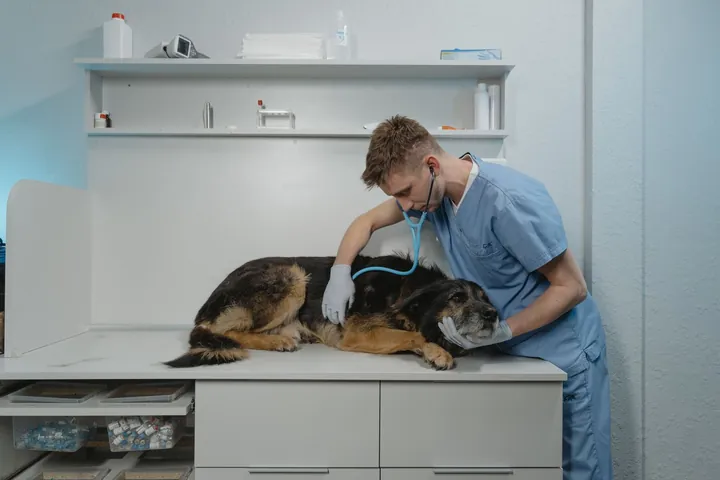
The classic pattern includes increased drinking and urination, increased appetite, excessive panting, reduced activity, a pot-bellied appearance, muscle weakness or wasting, thin or fragile skin, poor hair regrowth, symmetrical hair loss, recurrent skin or urinary infections, and bruising. Some dogs show only part of that pattern. Owners may first notice that the water bowl empties faster, the dog asks to go outside overnight, accidents begin, stairs become harder, or the coat does not return after clipping. The abdomen can look enlarged because the liver is bigger, abdominal muscles weaken, and fat distribution changes. These observations raise suspicion but do not establish a diagnosis.
Medication history is essential. Corticosteroids can produce iatrogenic Cushing’s syndrome, including oral, injectable, topical, ear, and eye products depending on dose and exposure. Never stop a long-term steroid abruptly without veterinary direction because sudden withdrawal can be dangerous.
When Do Cushing’s Signs Need Urgent Care?
Most Cushing’s evaluations are scheduled, but certain changes require faster action. Call the same day for repeated vomiting, diarrhea, refusal to eat, marked lethargy, weakness, black stool, painful urination, fever, sudden vision change, breathing difficulty, or rapidly worsening function. Dogs with Cushing’s can have concurrent diabetes, hypertension, urinary infection, gallbladder disease, pancreatitis, blood clots, or other complications. During trilostane therapy, vomiting, diarrhea, poor appetite, weakness, collapse, or unusual lethargy can indicate cortisol suppression that is too strong and requires immediate instructions from the prescribing veterinarian. Collapse, severe weakness, difficulty breathing, seizures, or a painful swollen abdomen warrants emergency care.
What Causes Cushing’s Disease in Dogs?
In naturally occurring disease, excess cortisol is usually driven by the pituitary gland or an adrenal gland. Pituitary-dependent hyperadrenocorticism is the more common form. A pituitary tumor produces excess ACTH, which stimulates both adrenal glands. Adrenal-dependent disease occurs when an adrenal tumor produces cortisol independently. The distinction influences prognosis, imaging, surgical options, and whether head or abdominal advanced imaging might be useful. Many dogs are managed medically even when the exact subtype is not surgically pursued, but the decision should be explicit.
Iatrogenic Cushing’s results from prolonged corticosteroid exposure. The medical history and medication list are therefore part of diagnosis, not an administrative detail.
Why Is High ALP Common but Not Diagnostic?
Cortisol can stimulate production of a canine-specific ALP enzyme and contribute to vacuolar hepatopathy, in which liver cells accumulate glycogen and become enlarged. Cholesterol, triglycerides, platelets, urine concentration, protein in the urine, and blood pressure may also change. These findings support the overall pattern but are not unique to Cushing’s. A sick, stressed dog or a dog with uncontrolled diabetes can produce misleading endocrine results. The AAHA guidelines emphasize testing dogs when clinical suspicion is meaningful and stabilizing important concurrent illness when possible.
For a detailed explanation, read Elevated Liver Enzymes in Dogs: What Do ALP and ALT Mean?.
How Is Cushing’s Disease Diagnosed?
Diagnosis begins with the history, physical examination, complete blood count, chemistry panel, and urinalysis. Blood pressure, urine culture, and urine protein testing may be recommended. Specific endocrine tests are then selected based on the presentation. Every test has limitations, and false-positive results are more likely when stress or non-adrenal illness is present. The veterinarian therefore interprets numbers alongside the clinical picture rather than treating a laboratory cutoff as a diagnosis by itself.
Low-dose dexamethasone suppression test
The low-dose dexamethasone suppression test, or LDDST, measures cortisol before and after a small dexamethasone injection. In a healthy feedback system, dexamethasone suppresses cortisol. Failure to suppress can support Cushing’s syndrome in the right patient. Some response patterns support pituitary-dependent disease, but lack of a differentiating pattern does not prove an adrenal tumor. The test takes several hours and requires correctly timed samples.
ACTH stimulation test and urine cortisol-to-creatinine ratio
The ACTH stimulation test evaluates adrenal response to synthetic ACTH. It can be useful when LDDST is nonconfirmatory but suspicion remains, when iatrogenic disease is considered, and for monitoring selected treatment protocols. The urine cortisol-to-creatinine ratio is sensitive for ruling out disease when normal, but a high result is not specific enough to confirm Cushing’s because stress and other illness can raise it.
How abdominal ultrasound helps
Ultrasound evaluates adrenal size and shape, liver changes, gallbladder contents, pancreas, kidneys, lymph nodes, and other abdominal organs. Symmetrical enlargement of both adrenal glands can support pituitary-dependent stimulation, while an asymmetric adrenal mass may raise concern for adrenal-dependent disease. Imaging does not replace endocrine confirmation and it cannot characterize every pituitary lesion. It is especially useful when concurrent hepatopathy, gallbladder disease, diabetes, or an adrenal tumor may change the plan.
Bliss offers diagnostic imaging and laboratory testing in Lake Forest.
How Is Cushing’s Disease Treated?
Treatment depends on subtype, clinical impact, concurrent disease, and family goals. Trilostane, sold as Vetoryl, is FDA-approved for pituitary- and adrenal-dependent Cushing’s disease in dogs and works by reducing cortisol synthesis. It manages rather than cures most pituitary-dependent disease. An adrenal tumor may be considered for surgical removal when staging and specialist evaluation indicate that surgery is appropriate. Pituitary-directed surgery or radiation is available in selected specialty settings, especially when a large pituitary tumor causes neurologic signs.
Treatment is intended to improve quality of life and clinical signs, not merely normalize ALP. The veterinarian considers drinking, urination, appetite, panting, energy, skin, coat, infection frequency, body composition, blood pressure, glucose, urine, and laboratory monitoring.
What Monitoring Is Needed During Trilostane Therapy?
Monitoring combines owner observations, physical examinations, chemistry and electrolyte testing, and a veterinarian-selected cortisol assessment. AAHA materials describe rechecks commonly performed about 10 to 14 days and 30 days after starting or changing therapy, with later monitoring individualized once the dog is stable. Timing relative to the dose matters for some tests, so follow the hospital’s instructions exactly. Do not improvise fasting, medication timing, or dose changes.
Keep a daily log of thirst, urination, appetite, panting, energy, vomiting, diarrhea, and medication administration. If your dog becomes unusually lethargic, weak, unwilling to eat, vomits, has diarrhea, or collapses, follow the prescribing veterinarian’s stop-and-call instructions immediately. Those signs can indicate cortisol has become too low and should not be watched at home as a routine adjustment.
Cushing’s Disease Decision Table
| What you notice | What it may mean | What to do |
| Gradual increased thirst, urination, appetite, panting, pot belly, hair or skin changes | Cushing’s disease is one possibility among several | Schedule examination, bloodwork, urinalysis, and a targeted diagnostic plan. |
| High ALP without compatible clinical signs | Medication effect, cholestasis, aging change, endocrine disease, or another cause | Do not diagnose from ALP alone; review history and repeat or expand testing as directed. |
| Positive endocrine test during uncontrolled illness or major stress | False-positive or confounded result is possible | Treat concurrent illness and follow the veterinarian’s interpretation and retesting plan. |
| Vomiting, diarrhea, poor appetite, weakness, or marked lethargy while taking trilostane | Cortisol may be too low or another illness may be present | Stop and call immediately according to the prescribing veterinarian’s instructions. |
| Collapse, severe weakness, difficulty breathing, seizure, or painful swollen abdomen | Potential endocrine crisis, clot, rupture, shock, or another emergency | Go to an emergency veterinary hospital now. |
How Can You Measure Cushing’s Signs at Home?
Objective observations make follow-up more useful. Measure a consistent amount of water into the bowl each morning and record what remains 24 hours later when practical, accounting for spills and other pets. Record urinary accidents, nighttime trips outside, appetite, panting at rest, sleep, stamina, and how easily your dog rises or uses stairs. Weigh your dog on the same scale and take monthly photographs from above and from the side to document abdominal shape, muscle loss, and coat changes. These records do not replace laboratory testing, but they help show whether treatment is improving the signs that matter.
Skin and urinary infections can be subtle in dogs with excess cortisol. Watch for odor, redness, pustules, recurrent ear debris, frequent licking, urine accidents, straining, or blood in the urine. A dog can have a urinary infection without obvious discomfort, so urine culture may be recommended in selected patients. Report new neurologic signs such as pacing, circling, behavior change, vision trouble, or seizures, especially in a dog with known pituitary-dependent disease, because a large pituitary mass requires a different discussion from routine hormone control.
What Should Families Know Before Starting Treatment?
Treatment succeeds when the household understands the goal, schedule, monitoring cost, and emergency instructions before the first dose. Ask which signs should improve first, when rechecks are due, how medication should be timed with food, what to do if a dose is missed, and which symptoms mean the medication should be withheld while calling the hospital. Keep capsules in their original container and follow handling instructions. Do not share medication between dogs or change between compounded and approved products without discussing consistency and monitoring with the veterinarian.
Concurrent disease often shapes the plan. Diabetes may become easier or harder to regulate as cortisol changes. Blood pressure, urine protein, recurrent infection, gallbladder abnormalities, pancreatitis risk, dental disease, and arthritis can all affect quality of life even when drinking and panting improve. Cushing’s management should therefore be reviewed as a whole-patient plan, not a single cortisol target. A good follow-up visit asks both whether cortisol control is safe and whether the dog can sleep, move, eat, drink, urinate, and interact more normally.
Frequently Asked Questions
Is Cushing’s disease the same as high cortisol?
Cushing’s syndrome describes the clinical effects of chronic cortisol excess. Diagnosis requires compatible signs and appropriate testing because stress, medication, and other illness can alter cortisol results.
Can a dog have Cushing’s without drinking excessively?
Yes. Dogs do not always show every classic sign, especially early in the course. Testing is most useful when the whole history and laboratory pattern create meaningful clinical suspicion.
Does a positive LDDST show whether the cause is pituitary or adrenal?
Sometimes the suppression pattern supports pituitary-dependent disease, but failure to show that pattern does not prove an adrenal tumor. Ultrasound, endogenous ACTH, or additional imaging may be needed.
Will treating Cushing’s normalize liver enzymes?
Liver values may improve when cortisol excess is controlled, but enzymes are not the only treatment target and may remain abnormal for another reason. Clinical response and the full monitoring panel matter.
How long will my dog need treatment?
Medical treatment is usually lifelong unless a curative surgical option is successfully pursued. The dose and monitoring schedule can change over time, so planned rechecks remain essential even when your dog seems well.
Conclusion
Cushing’s disease is manageable in many dogs, but diagnosis and treatment require more than one abnormal liver value. The most reliable pathway starts with a compatible pattern of clinical signs, confirms the syndrome with appropriate testing, identifies important concurrent disease, and uses structured monitoring after treatment begins.
If your dog needs evaluation, request an appointment with Bliss Animal Hospital in Lake Forest or call (949) 354-5201. For collapse, severe weakness, uncontrolled vomiting, yellow gums or eyes with illness, or a painful swollen abdomen, seek immediate veterinary care.
Dog Endocrine Testing and Senior Care in Orange County, CA
Bliss Animal Hospital is located in Lake Forest and serves dogs and their families across South Orange County, CA.
About Bliss Animal Hospital
Our team, led by Dr. Nayara Pataro and Dr. Sam Amirshahi, is dedicated to providing compassionate, top-rated care right here in South Orange County. With a strong emphasis on relationships and personalized veterinary care, we’re here to support you and your pet’s health and happiness. If you’re looking for convenient, high-quality care nearby, check out our veterinarian services in Lake Forest, CA and surrounding areas like Veterinarian near Mission Viejo, CA, Irvine, CA Veterinarian (Great Park and Portola Springs) and vet near Rancho Santa Margarita, CA.

















Leave A Comment