
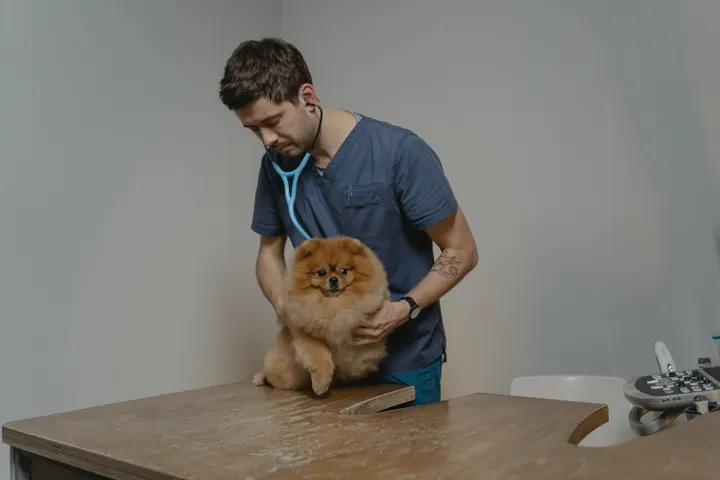
IVDD in Dogs: Symptoms That Require Immediate Veterinary Care
Top 3 Takeaways
Introduction
A dog that suddenly refuses stairs, cries when picked up, arches the back, walks with a wobbly rear end, or drags a paw may have a spinal problem rather than a simple muscle strain. Intervertebral disc disease, usually shortened to IVDD, occurs when one of the cushioning discs between the vertebrae degenerates and bulges or ruptures toward the spinal cord. The result can range from pain alone to weakness, loss of coordination, inability to walk, loss of bladder control, and complete paralysis.
The most important owner question is not whether you can confirm IVDD at home. You cannot. Several orthopedic and neurologic disorders can look similar. The urgent question is whether your dog’s function is changing. A dog who can walk normally but appears painful needs prompt veterinary assessment and strict activity restriction while awaiting guidance. A dog who becomes wobbly, knuckles a paw, drags the toes, cannot rise, or loses voluntary urination needs urgent or emergency evaluation. This guide explains what IVDD means, which signs matter most, what a veterinarian may test, and how findings affect the choice between medical management and surgical referral.
What Is IVDD in Dogs?
Intervertebral discs sit between most vertebrae and act as flexible shock absorbers. Each disc has a fibrous outer layer and a softer inner center. With disc degeneration, the inner material can harden and rupture through the outer layer, or the entire disc can gradually protrude. If disc material enters the spinal canal, it may bruise or compress the spinal cord and/or nearby nerve roots. The location and force of that event influence whether the dog shows neck pain, back pain, limb weakness, or paralysis.
Owners often use “slipped disc,” “herniated disc,” and IVDD interchangeably. Those phrases describe related processes, but they do not identify the exact disc, the amount of spinal cord compression, or the severity of nerve injury. Chondrodystrophic breeds, including Dachshunds, French Bulldogs, Corgis, Beagles, and Shih Tzus, have a genetic tendency toward earlier disc degeneration, but any dog can develop a disc problem. Large dogs may also develop chronic disc protrusion or other spinal conditions that create similar signs.
IVDD is therefore a clinical diagnosis built from the history, neurologic examination, and, when necessary, advanced imaging. A normal-looking dog between painful episodes does not rule it out. Likewise, visible disc mineralization on an X-ray does not prove that a particular disc is causing today’s signs.
What Are the Early Signs of IVDD?
Early IVDD may look like pain, stiffness, or reluctance rather than obvious paralysis. A dog with neck pain may hold the head low, turn the entire body instead of moving the neck, resist lowering the head to a bowl, tremble, yelp, or develop muscle spasms. A dog with thoracolumbar, or mid-to-lower back, pain may arch the spine, tense the abdomen, move cautiously, refuse stairs, stop jumping, or cry when lifted. Some dogs pant, hide, cannot settle, or become unusually defensive because movement hurts.
Neurologic changes can be subtle at first. Watch for a swaying rear end, delayed paw placement, crossing the hind feet, scuffed toenails, stumbling on turns, or the top of a paw briefly contacting the floor. Knuckling means the paw folds under so the dog bears weight on its upper surface. These signs suggest impaired communication between the spinal cord and limbs and deserve faster assessment than uncomplicated soreness.
Do not repeatedly test the dog by walking farther, using stairs, or encouraging a jump. A dog can worsen during the time it takes to “see if it loosens up.” Keep movement minimal, block furniture and stairs, and call a veterinarian. Do not give ibuprofen, naproxen, acetaminophen, aspirin, leftover steroids, or another pet’s medication.
When Is IVDD an Emergency?
Treat an IVDD-like problem as an emergency when neurologic function is lost or is deteriorating. Immediate warning signs include inability to stand or walk, paralysis of one or more limbs, rapidly worsening weakness, repeated falling, dragging the body, loss of voluntary urination, severe uncontrolled pain, or a sudden decline after a fall or other trauma. A dog who was walking earlier and now cannot support the rear legs should not wait for the next routine appointment.
Loss of deep pain perception is a specific neurologic finding assessed by a veterinarian. It is not the same as whether a dog pulls the foot away from a pinch, because withdrawal can be a spinal reflex. Owners should not pinch toes or attempt to test sensation. The examination must be performed and interpreted correctly because deep pain status has major prognostic and treatment implications.
Urination also matters. A dog may leak urine because the bladder overfills, even though voluntary control has been lost. Conversely, a painful dog may hesitate to posture. If your dog cannot produce a normal urine stream, has a firm or enlarged abdomen, or is suddenly incontinent with weakness, seek immediate guidance. Minimize movement during transport and call the receiving hospital so the team is prepared.
During business hours, stable dogs with back pain may be directed to urgent veterinary care near Irvine. Paralysis, inability to stand, severe trauma, collapse, or rapidly worsening neurologic function requires an emergency veterinary hospital.
How Does a Veterinarian Diagnose IVDD?
The veterinarian first determines where the problem is located and how severe it is. The history includes the time of onset, progression, trauma, previous episodes, medications, urination and defecation, and whether the dog can rise and walk without support. The physical examination looks for pain and competing illness. The neurologic examination evaluates gait, posture, paw positioning, spinal reflexes, muscle tone, pain localization, and, in severely affected dogs, deep pain perception.
Plain X-rays can identify fractures, dislocations, vertebral changes, infection, tumors, or mineralized discs, but they do not show the spinal cord clearly and cannot reliably confirm which disc is compressing it. A normal X-ray does not exclude IVDD. When surgery is being considered, signs are severe, or the diagnosis remains uncertain, MRI is commonly preferred because it shows the spinal cord, discs, hemorrhage, and other soft tissues in detail. CT can be highly useful, especially for mineralized disc extrusion, and may be combined with contrast in selected cases.
The choice of imaging depends on the neurologic examination, suspected location, availability, anesthetic considerations, and whether the result will change treatment. Bloodwork may be used to evaluate general health and medication or anesthesia safety, but no routine blood test proves IVDD.
Bliss Animal Hospital offers diagnostic imaging and in-house laboratory testing when those tools fit the initial workup. MRI or CT may still require referral to a specialty hospital.
What Other Conditions Can Look Like IVDD?
Back pain and weakness do not automatically equal IVDD. Orthopedic injuries, fractures, joint disease, hip or knee problems, muscle injury, and painful abdominal disease can alter gait. Spinal cord inflammation, infection, tumors, vertebral malformations, lumbosacral disease, fibrocartilaginous embolism, degenerative myelopathy, and trauma can also produce weakness or incoordination. Some of these conditions are painful; others are not. Some improve with rest, while others require surgery, immune-suppressing medication, antibiotics, cancer treatment, or rehabilitation.
The timeline provides clues. A sudden painful event in a predisposed breed is compatible with disc extrusion, but it is not proof. A nonpainful, very sudden neurologic deficit after vigorous activity may lead the veterinarian to consider a vascular spinal cord event. Slowly progressive weakness without pain can fit degenerative or compressive diseases. Fever, weight loss, or severe systemic illness raises different concerns.
This is why treatment should not begin with a label alone. Steroids, nonsteroidal anti-inflammatory drugs, and pain medicines have meaningful risks and can interfere with one another. Manipulation or forceful stretching is also unsafe before spinal instability, fracture, or acute disc disease is excluded.
How Do IVDD Signs Affect Treatment and Prognosis?
Treatment decisions are driven by neurologic severity, progression, imaging findings, recurrence, and the dog’s overall health. A dog with pain alone and a normal gait may be managed medically under close veterinary supervision. A walking dog with mild weakness may also be considered for conservative care or surgery depending on progression, recurrence, pain control, and imaging. A nonwalking dog, especially one worsening rapidly, generally warrants urgent referral to discuss advanced imaging and decompressive surgery.
Prognosis cannot be summarized by breed or by the word IVDD. Walking ability and deep pain perception are important clinical markers, but spinal cord injury varies. Many ambulatory dogs recover with appropriate restricted activity and medication. Many nonambulatory dogs recover after surgery. Prognosis becomes more guarded when deep pain perception is absent, signs have been severe for longer, or progressive myelomalacia develops. Progressive myelomalacia is a rare, devastating extension of spinal cord damage that can move beyond the original injury and affect breathing.
Owners should ask the veterinarian what neurologic grade their dog has, whether function is stable or deteriorating, what imaging would change, and what specific change should trigger emergency reassessment. Clear stop rules are safer than a vague plan to “watch closely.”
To learn what treatment and home recovery involve, read IVDD Treatment in Dogs: Crate Rest, Surgery, and Safe Recovery at Home.
IVDD Symptom and Urgency Decision Table
| What you notice | What it may mean | What to do |
| Back or neck pain; dog still walks normally | Pain could come from IVDD or another spinal, orthopedic, or internal problem | Restrict activity now and call for prompt veterinary assessment. |
| Wobbliness, crossing feet, knuckling, scuffing nails, or new weakness | Possible spinal cord dysfunction | Call the same day for urgent assessment. Escalate if function worsens. |
| Cannot stand or walk, paralysis, rapidly worsening weakness, or loss of voluntary urination | Severe spinal cord injury is possible | Go to an emergency veterinary hospital immediately. Minimize movement and call ahead. |
| Severe pain despite prescribed medication, repeated crying, inability to settle | Pain control may be inadequate or disease may be progressing | Request urgent re-evaluation; emergency care may be needed. |
| Major trauma plus back pain or weakness | Fracture, instability, internal injury, or spinal cord trauma | Emergency care now. Transport on a firm support when practical. |
Frequently Asked Questions
Can IVDD start with pain only?
Yes. Some dogs initially show neck or back pain without weakness. Pain-only cases still need veterinary assessment because function can worsen and other conditions can look similar.
Does a normal X-ray rule out IVDD?
No. X-rays show bone well but do not directly show spinal cord compression. MRI or CT may be needed when the neurologic examination indicates advanced imaging.
Can a dog with IVDD still wag the tail?
Yes. Tail wagging does not prove that walking ability, bladder control, or deep pain perception is intact. Prognosis depends on a complete neurologic examination.
Should I let my dog walk to see how bad it is?
No. Limit movement and record only a brief video if it can be done safely. Repeated walking tests, stairs, and jumping can increase pain or risk further injury.
Can IVDD happen again?
Yes. A treated disc can heal, but other discs may also be degenerated. Recurrence risk and prevention planning should be discussed after the acute episode is stable.
Is paralysis always permanent?
No. Many dogs recover useful function, particularly with timely, severity-appropriate treatment. The outlook depends on neurologic status, imaging, progression, and response to care.
Conclusion
IVDD can begin as back or neck pain and progress to weakness, loss of coordination, inability to walk, or paralysis. The practical decision is based on function and progression, not on whether your dog is crying. New wobbliness, knuckling, dragging, inability to stand, or loss of bladder control should never be watched overnight. A veterinarian must localize the problem and determine whether conservative care, advanced imaging, or urgent surgical referral is appropriate.
If your dog is painful but stable, request an appointment with Bliss Animal Hospital in Lake Forest or call (949) 354-5201. If your dog cannot stand, is paralyzed, is rapidly worsening, or has severe uncontrolled pain, go directly to an emergency veterinary hospital.
Dog Back Pain and Supportive Care Services in Orange County, CA
Bliss Animal Hospital is located in Lake Forest and serves dog owners across South Orange County. These verified pages match the article’s general veterinary, urgent-care, or supportive-care topics:
About Bliss Animal Hospital
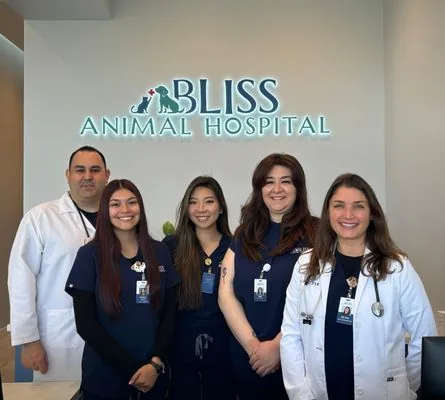
Our team, led by Dr. Nayara Pataro and Dr. Sam Amirshahi, is dedicated to providing compassionate, top-rated care right here in South Orange County. With a strong emphasis on relationships and personalized veterinary care, we’re here to support you and your pet’s health and happiness. If you’re looking for convenient, high-quality care nearby, check out our veterinarian services in Lake Forest, CA and surrounding areas like Veterinarian near Mission Viejo, CA, Irvine, CA Veterinarian (Great Park and Portola Springs) and vet near Rancho Santa Margarita, CA.



















Leave A Comment