
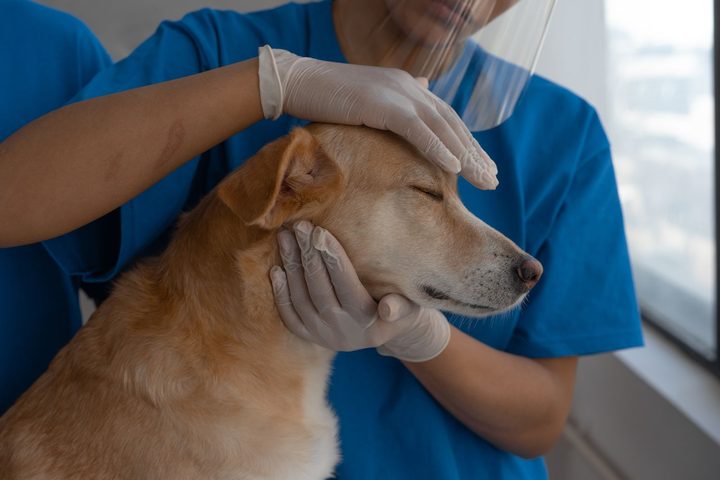
Eyelid Mass Removal in Dogs: When Does an Eyelid Growth Need Surgery?
Top 3 Takeaways
You notice what looks like a tiny wart on your dog’s eyelid. A few weeks later, it’s still there. Your dog is eating, playing, and acting normally, so is it safe to leave it alone? Some eyelid growths can be monitored, but the decision depends on where the bump sits, whether it touches the eye, how it’s changing, and what your veterinarian finds on exam. A growth that barely shows in a photo can be more irritating than a larger bump that points away from the eye.
If your dog’s eye itself is suddenly bulging or displaced, your dog suddenly seems unable to see, or you suspect a penetrating injury, go to an emergency veterinary hospital immediately. Don’t wait for a routine appointment. For new squinting, redness, discharge, or cloudiness without an obvious major injury, call for same-day guidance. Bliss Animal Hospital offers urgent veterinary care during business hours.
What is an eyelid mass, and is it the same as cherry eye?
An eyelid mass is a lump on or within the upper or lower eyelid. Many eyelid tumors in older dogs are benign, meaning noncancerous. One common example is a meibomian gland adenoma, a growth that starts in one of the tiny oil-producing glands along the eyelid edge. The oil from these glands helps keep the tear film stable. Other growths can look similar, so a bump’s color, shape, or wart-like surface cannot tell you for sure what it is. What matters at the first visit is both what the mass might be and what it’s doing to the eye. A benign growth can still cause discomfort if it touches the cornea, the clear surface at the front of the eye.
How is eyelid mass removal different from other eye surgeries?
A lump growing from the edge of the upper or lower eyelid is different from cherry eye in dogs. Cherry eye occurs when the gland of the third eyelid slips out of position and becomes visible near the inner corner of the eye. The two can look confusingly similar from a distance, but they involve different tissues and call for different treatment. Eyelid mass surgery is also not eye removal surgery: the purpose of eyelid mass removal is to address the growth while preserving the eye and the eyelid’s ability to blink and protect it. For lumps elsewhere on the body, see our guide to dog tumor and mass removal.
When can you monitor a dog’s eyelid growth, and when should it come off?
Monitoring may be appropriate after a veterinary exam if the mass is small or stable, the eye is comfortable, your dog can blink normally, and the growth is not touching or damaging the cornea. Removal becomes more likely if it rubs the eye, changes the shape of the lid, repeatedly bleeds, grows, or has features that raise concern for a tumor that needs testing or treatment. Size alone does not settle the question. A small bump pointing inward can scrape the cornea with each blink, while a more visible bump growing outward may not touch the eye at all. If removal is likely, discussing it before the mass gets larger can matter because a larger growth may leave less healthy eyelid tissue for repair.
| What you notice | What it may mean | What to do |
| A new bump, but the eye is open and comfortable | The mass may not be irritating the eye. Appearance alone cannot identify it. | Schedule a veterinary exam soon. |
| A previously examined bump looks larger or changes shape | The growth may be changing in a way that affects follow-up or surgery planning. | Call for an earlier recheck. Mention any bleeding, discharge, or change in blinking. |
| New squinting, repeated pawing, redness, discharge, or cloudiness | The eye may be painful or irritated. An ulcer or another eye condition could be responsible. | Call the same day. If your dog can’t be seen promptly, contact an urgent or emergency veterinary hospital for guidance. |
| The eye suddenly bulges or is displaced, your dog suddenly seems unable to see, or there is a suspected penetrating injury | A veterinary emergency can threaten vision or the eye itself. | Go to an emergency veterinary hospital immediately. |
If your veterinarian recommends monitoring, leave with a recheck date and a clear idea of what would bring you back sooner. A dated photo in similar lighting, taken without pulling on the lid, can help you show whether the visible bump has changed. Also note whether your dog is blinking more, tearing, or rubbing the eye. Those changes matter even if the bump looks the same. A photo is useful for comparison, but it can’t rule out a scratch or show what happens every time the lid closes.
What will the veterinarian check, and what does pathology add?
The exam answers two separate questions: Is the growth hurting the eye, and what kind of growth might it be? Your veterinarian may check where it starts, how much of the eyelid it involves, whether your dog can close the lid completely, and whether the growth touches the cornea. If the eye looks irritated, the veterinarian may use fluorescein, a dye that highlights defects on the corneal surface. A stain can help identify a corneal ulcer, an open sore on that clear surface, but it does not identify the eyelid growth. Finding an ulcer changes the conversation: the eye needs treatment, and if the mass is rubbing the cornea, that source of irritation needs to be addressed too.
Is examining cells before surgery the same as testing the removed tissue?
No. Cytology looks at individual cells collected from a mass. It can provide useful information before surgery in selected cases, but a small sample does not always give a clear answer. Histopathology, often called pathology or biopsy testing on the estimate, is when a veterinary pathologist examines a piece of tissue or the removed growth under a microscope. Because the pathologist can examine how the cells are arranged in the tissue, the report can help identify the growth, distinguish a benign tumor from a malignant one, and explain how it is likely to behave. If a growth looks concerning before surgery, a veterinarian may recommend sampling or a specialist consult first rather than waiting until after removal.
What could the pathology report change?
When the specimen and procedure allow, the pathologist may assess the surgical margins, the cut edges of the removed tissue. If tumor cells reach an examined edge, some may remain at the surgical site. That doesn’t automatically mean another operation is needed. The next step depends on the type of growth, how it behaves, the surgical approach, and how much eyelid tissue can be safely removed. One result may call for routine rechecks. Another may prompt closer monitoring, more testing, or a referral. Before surgery, ask whether the tissue will be submitted, what the lab can assess, and how you’ll receive the results.
What happens before, during, and after eyelid mass surgery?
Eyelid mass surgery has two goals: addressing the growth and preserving a lid that closes smoothly over the eye. That second goal is why location matters so much. A small growth with a narrow base may need a limited procedure. If the mass involves more of the lid edge, the veterinarian may remove a small section of eyelid containing the growth and bring the edges back together. That procedure is called a wedge resection. A growth involving a large part of the lid or a difficult location may need reconstruction by a veterinary ophthalmologist, a veterinarian who specializes in eyes. The technique and anesthesia plan depend on the mass and your dog’s overall health.
How do you prepare your dog for the procedure?
Give the veterinary team a list of medicines and supplements your dog takes, along with any known health conditions or problems with past anesthesia or recovery. The team may recommend bloodwork or other tests based on the exam and medical history. Follow your dog’s individual food, water, and medication instructions rather than using instructions from a previous procedure. Before drop-off, make sure you know how the team will reach you if the plan changes and what you’ll need at home for recovery.
What should you watch for at home?
Follow your dog’s discharge instructions for the protective cone, activity restrictions, and prescribed medications. A properly fitted cone helps keep a paw or the edge of a couch away from the stitches. Don’t apply leftover eye drops or put anything on the incision unless your veterinarian directs you to. Mild swelling can occur after surgery, but worsening swelling, new discharge, increasing squinting, bleeding, a cloudy eye, or an opening in the incision warrants a prompt call rather than waiting for the scheduled recheck. Keep that recheck even if your dog seems comfortable: it gives the veterinarian a chance to see how the eyelid is healing and whether it closes properly.
What goes into a standalone dog eyelid mass removal estimate?
A standalone estimate covers what it takes to evaluate, remove, and follow up on the eyelid growth when that is the only planned procedure. It is not the same as the fee to add a mass removal to a dental cleaning. In a combined visit, some preparation, anesthesia setup, and recovery care may already be accounted for elsewhere on the estimate. The eyelid procedure can still add surgical time, supplies, or a separate lab fee. If you’re comparing options, ask for the total for eyelid surgery alone and, if your veterinarian considers a combined visit appropriate, the total for both procedures together. Comparing the full plans is more useful than comparing two lines labeled “mass removal.”
Which items should you ask about?
The following is a checklist for reviewing an estimate, not a fixed package. Ask which items are included, billed separately, or only needed if the exam or surgery changes the plan.
You don’t need to schedule a dental cleaning to have an eyelid growth evaluated. If both procedures are already being considered, ask whether combining them is appropriate for your dog and how much anesthesia time it would add. If the growth is hurting the eye, don’t postpone the exam to line it up with a dental appointment. The eye findings should guide the timing. You can learn more about soft tissue surgery at Bliss Animal Hospital before discussing your dog’s specific plan.
Frequently Asked Questions
Can eye drops make my dog’s eyelid mass go away?
Eye drops may treat irritation or a corneal injury, but they generally do not remove a true eyelid tumor. If the growth keeps rubbing against the eye, your veterinarian may recommend addressing the mass as well as treating the injured surface.
Is my senior dog too old for eyelid surgery?
Age alone does not decide whether surgery is appropriate. The veterinarian weighs your dog’s overall health, exam findings, recommended tests, and the planned procedure against the downside of leaving the growth in place. That discussion helps you compare the risks.
Can the growth come back after removal?
Yes, some eyelid growths can recur. A new bump can also develop nearby and look like the original one. If you notice a change after healing, schedule a recheck and ask whether the original pathology report helps explain what you’re seeing.
Can I trim or treat an eyelid bump at home?
No. Don’t cut, squeeze, or apply wart remover to a bump near your dog’s eye. You could injure the eyelid or cornea, and treating it at home can delay identifying what it is. Have your veterinarian examine it instead.
Conclusion
The first step for a new eyelid bump is an exam, not a decision about surgery. If the growth is stable and the eye is comfortable, your veterinarian may recommend a monitoring plan. If it’s rubbing the eye, changing, or interfering with blinking, discuss removal and what pathology could tell you. If surgery is recommended, ask for the complete standalone estimate so you know what’s included before you schedule.
If your dog has a new or changing eyelid bump and the eye is comfortable, request an eyelid growth exam at Bliss Animal Hospital in Lake Forest or call (949) 354-5201. If your dog is squinting or the eye looks cloudy, call the same day rather than waiting for an online response.
Dog Eyelid Growth Evaluation in Orange County, CA
Bliss Animal Hospital is in Lake Forest and serves dog owners from nearby South Orange County communities, including Irvine, Rancho Santa Margarita, Mission Viejo, Tustin, Laguna Woods, and Laguna Hills.
About Bliss Animal Hospital
Our team, led by Dr. Nayara Pataro and Dr. Sam Amirshahi, is dedicated to providing compassionate, top-rated care right here in South Orange County. With a strong emphasis on relationships and personalized veterinary care, we’re here to support you and your pet’s health and happiness. If you’re looking for convenient, high-quality care nearby, check out our veterinarian services in Lake Forest, CA and surrounding areas like Veterinarian near Mission Viejo, CA, Irvine, CA Veterinarian (Great Park and Portola Springs) and vet near Rancho Santa Margarita, CA.
















Leave A Comment