

Pet Tooth Extractions for Dogs and Cats: Why They Are Needed and What to Expect
Top 3 Takeaways
Introduction
When a veterinarian says that your dog or cat may need teeth extracted, the recommendation can sound more severe than expected. Owners commonly ask whether the tooth can be saved, whether their pet will still eat normally, how much pain the procedure causes, and why the final number of extractions sometimes cannot be confirmed before anesthesia. The short answer is that extraction is not recommended simply because a tooth looks stained or because tartar is present. It is used when examination findings and dental radiographs show that a tooth is painful, infected, fractured beyond predictable repair, affected by tooth resorption, or no longer securely supported by healthy bone and gum tissue. Removing that source of pain can improve comfort even when a pet was still eating before the procedure.
This guide explains the questions that most often arise before and after dental extractions. You will learn how veterinarians decide which teeth should be removed, why X-rays and anesthesia are necessary, what happens during the procedure, how dogs and cats function with fewer teeth, and which recovery signs require a call. It also explains why an awake oral examination can identify concern but cannot always define the complete treatment plan. Individual recommendations depend on your pet's age, health, tooth anatomy, disease severity, and anesthetic assessment.
Why Would a Dog or Cat Need a Tooth Extracted?
A tooth is usually extracted because leaving it in place would preserve disease rather than function. Healthy teeth help a pet grasp food, chew, groom, and interact with the environment. A diseased tooth can instead become a persistent source of inflammation, infection, and pain. Pets often conceal oral discomfort, so normal eating does not prove that the mouth is comfortable. Some animals swallow kibble with limited chewing, shift food to the other side, prefer softer food, stop playing with firm toys, or show only subtle changes in sleep, grooming, or social behavior. The goal is not to remove teeth unnecessarily. It is to identify teeth that cannot remain comfortably and predictably functional.
Advanced periodontal disease
Periodontal disease damages the tissues that anchor a tooth, including the gum, periodontal ligament, and surrounding bone. A crown can look relatively intact while the root has lost substantial support below the gumline. Dental probing measures pockets around each tooth, while radiographs show bone loss and root changes. A severely mobile tooth or one with advanced attachment loss may need extraction because cleaning cannot rebuild the missing support.
Broken or nonvital teeth
A fracture that exposes the pulp, the living tissue inside the tooth, allows bacteria to enter the root canal. The tooth may become nonvital and develop infection around the root. Depending on the tooth, fracture pattern, patient, and available expertise, treatment may involve extraction or referral for root canal therapy. Simply watching a pulp-exposed tooth does not remove the source of infection or pain.
Tooth resorption in cats
Feline tooth resorption occurs when tooth structure is progressively destroyed. Lesions may begin below the gumline and can be intensely painful even when the visible crown looks only mildly abnormal. Dental radiographs are essential because the root pattern determines the appropriate treatment technique. In some cases, the entire tooth and roots are removed. In selected radiographically defined cases, a different crown-removal approach may be appropriate. This decision cannot be made safely by looking at the crown alone.
Infection, retained roots, crowding, or trauma
Other reasons for extraction include a tooth-root abscess, retained root fragments, teeth positioned in a way that injures nearby tissue, severe crowding, certain unerupted teeth, traumatic injury, or disease around an oral mass. These problems require an individualized plan. A board-certified veterinary dentist may be recommended for jaw fractures, difficult strategic teeth, oral tumors, severe stomatitis, or cases in which advanced imaging or tooth-sparing treatment could change the outcome.
How Does the Veterinarian Decide Which Teeth to Remove?
The decision is made tooth by tooth. An awake examination is useful for finding bad breath, tartar, red gums, obvious fractures, swelling, loose teeth, or oral masses. It is not a complete dental assessment because most dogs and cats will not allow careful probing around every tooth or placement of a dental X-ray sensor while awake. Once the patient is anesthetized, the veterinarian can examine the entire mouth, chart each tooth, measure periodontal pockets, test mobility, clean away deposits, and review radiographs of the crowns, roots, and surrounding bone. The treatment plan may therefore change when hidden disease becomes visible.
This is why consent and communication before the procedure matter. Ask how the hospital handles unexpected findings. Some practices obtain authorization for a defined treatment range. Others call the owner after X-rays and before extractions begin. Make sure the team has a reliable daytime contact number and understands any limits you want discussed. If the veterinarian cannot reach you, the hospital may need to postpone unapproved treatment, which can mean another anesthetic appointment.
| Finding | What it may mean | How it can affect treatment |
| Loose tooth with bone loss | Advanced periodontal support loss | Extraction is often recommended when the tooth cannot remain stable and comfortable. |
| Fracture with pulp exposure | Pain and bacterial access to the root canal | Extraction or referral for root canal therapy may be discussed. |
| Cat tooth with resorptive changes | Progressive, painful loss of tooth structure | Radiographs determine the lesion type and surgical approach. |
| Facial swelling or draining tract | Possible tooth-root infection or another oral disorder | Prompt imaging and treatment are needed; extraction may be part of care. |
| Discolored but intact tooth | Possible loss of vitality after trauma | Radiographs and vitality assessment guide monitoring, extraction, or referral. |
| Tartar without attachment loss | Plaque and calculus with potentially treatable gingivitis | Professional cleaning may be sufficient; tartar alone does not prove extraction is needed. |
Why Are General Anesthesia and Dental X-Rays Necessary?
Tooth extraction is oral surgery. General anesthesia keeps the patient unconscious, still, and protected from pain while an endotracheal tube helps protect the airway from water, debris, and bacteria. It also allows the dental team to position the patient, clean below the gumline, probe each tooth, obtain diagnostic images, and use instruments precisely. Anesthesia-free cleaning cannot provide a complete radiographic examination or safely perform extractions. It may remove visible deposits from the crown while leaving disease beneath the gumline untreated.
Dental X-rays are equally important. Much of each tooth lies below the gumline, and root anatomy varies widely. Pre-extraction radiographs confirm the problem and help the veterinarian plan the procedure. Post-extraction radiographs can verify that the intended tooth structure has been removed and identify retained fragments or other concerns. This is especially important for multi-rooted teeth and feline tooth resorption.
Anesthesia always carries risk, but risk is managed through preparation and monitoring rather than by avoiding necessary treatment indefinitely. The veterinary team reviews medical history, performs a physical examination, and commonly recommends pre-anesthetic laboratory testing. The anesthetic plan is then adjusted to the patient. During the procedure, trained personnel monitor variables such as heart rate, oxygenation, ventilation, blood pressure, temperature, and anesthetic depth. Monitoring continues through recovery, when some anesthetic complications can still occur.
What Happens During a Pet Tooth Extraction?
The exact technique depends on the tooth and the disease. A small single-rooted tooth may be removed through a relatively limited approach. A large canine or multi-rooted chewing tooth commonly requires a surgical extraction. The veterinarian may create a gingival flap, remove a controlled amount of bone, section a multi-rooted tooth into individual root segments, gently elevate each portion, smooth the socket, and close the gum with absorbable sutures. Force alone is not the goal. Controlled technique reduces unnecessary trauma to the jaw and surrounding tissues.
Pain control should begin before the first incision and continue into recovery. A multimodal plan uses more than one method so that no single drug has to carry the entire burden. Depending on the patient, this may include premedication, general anesthetic agents, local or regional dental nerve blocks, and postoperative analgesics. Local blocks can reduce the amount of inhaled anesthetic needed and provide pain relief during the early recovery period. Antibiotics are not automatically required for every extraction. The veterinarian considers the infection pattern, procedure, immune status, and other patient-specific factors.
After removal, the veterinarian checks the socket and closure, obtains post-extraction images when indicated, and documents the treatment. The pet then moves to a monitored recovery area. Discharge timing depends on alertness, temperature, comfort, swallowing, and overall stability. Some patients go home the same day; patients with significant medical risk or extensive oral surgery may require longer observation or referral-level care.
Will My Pet Be Able to Eat Normally With Missing Teeth?
Most dogs and cats function very well after painful teeth are removed. The mouth adapts, and many pets eat more comfortably because the diseased teeth are no longer hurting. Dogs and cats do not chew food in exactly the same way people do. Many can manage appropriate dry food after complete healing, although the veterinarian may recommend a different texture based on the number and location of missing teeth, jaw health, or another medical condition. During the initial healing period, soft food or moistened kibble is commonly recommended so firm pieces do not traumatize the surgical sites.
The functional impact depends partly on which teeth are removed. Incisors, canines, premolars, and molars have different roles. A pet losing several severely diseased teeth may still experience a net improvement because comfortable eating matters more than retaining painful structures. If a strategic tooth, such as a canine or major chewing tooth, is affected, ask whether extraction, root canal therapy, or specialist evaluation offers the best balance of comfort, function, predictability, and cost. Tooth preservation is valuable only when the saved tooth can remain healthy and pain-free.
Cats with severe caudal stomatitis or widespread dental disease may need many extractions, sometimes including most or all premolars and molars. That recommendation can be emotionally difficult, but extensive extraction may substantially reduce painful inflammatory stimulation in appropriately selected cases. It is not a universal cure, and some cats need continued medical management. A clear diagnosis and realistic discussion of expected outcomes are essential.
How Should I Prepare for the Dental Procedure?
Preparation starts with accurate information. Tell the veterinary team about every medication and supplement, previous anesthetic reaction, cough, vomiting episode, appetite change, seizure, heart condition, kidney disease, diabetes, or possible pregnancy. Follow the hospital's fasting and medication instructions exactly. Puppies, kittens, diabetic patients, and pets with specific medical conditions may receive instructions that differ from a standard adult schedule, so do not apply generic internet fasting advice to every patient.
At Bliss Animal Hospital, published dental information describes pre-anesthetic bloodwork, anesthesia, oral examination, scaling above and below the gumline, polishing, dental X-rays, and treatment such as extractions when the veterinarian determines they are necessary. Your pet's final plan must still be individualized after examination and imaging.
What Is Normal After Tooth Extraction, and When Should I Call?
For the first evening, many pets are sleepy, quieter than usual, mildly unsteady, or less interested in food because of anesthesia and medication. A small amount of pink-tinged saliva can occur after oral surgery. Mild swelling and cautious eating may also be expected, depending on the procedure. Follow the discharge sheet from the treating hospital because instructions differ with the teeth removed, sutures placed, medications prescribed, and health of the patient. Do not give aspirin, ibuprofen, acetaminophen, or leftover medication unless the veterinarian specifically prescribed it for this pet.
Keep the recovery area calm and prevent chewing on hard objects. Give medications exactly as labeled and complete any prescribed course unless the hospital changes the plan. Do not brush over extraction sites or pull the lip repeatedly to inspect sutures. If you were asked to check the mouth, do so gently and only as directed. Many oral sutures dissolve on their own. A recheck may be recommended to assess healing, appetite, comfort, odor, and any remaining dental disease.
| What you notice | What it may mean | What to do |
| Sleepiness or mild unsteadiness the first evening | Expected anesthetic or medication effect in many pets | Provide quiet supervision and follow discharge instructions; call if it is severe or worsening. |
| Small amount of pink saliva | Minor postoperative oozing | Monitor closely. Call if bleeding is bright red, persistent, increasing, or pooling. |
| Eating soft food cautiously | Expected oral tenderness | Offer the prescribed texture and portions; give pain medication as directed. |
| Refusal of food or water, repeated vomiting, or marked lethargy | Pain, nausea, medication effect, or complication | Call the treating hospital promptly, especially if signs persist or worsen. |
| Increasing facial swelling, foul odor, pus, or worsening pain | Possible infection, inflammation, bleeding, or wound problem | Request a same-day veterinary assessment. |
| Trouble breathing, collapse, uncontrolled bleeding, blue or very pale gums | Potential life-threatening emergency | Go to an emergency veterinary hospital immediately. |
Bliss Animal Hospital provides urgent care during business hours. Breathing difficulty, collapse, uncontrolled bleeding, or severe distress requires immediate emergency care rather than waiting for a routine recheck.
How Can Future Dental Disease Be Reduced?
An extraction treats a tooth that is already diseased; it does not prevent plaque from forming on the remaining teeth. Once the mouth has healed and the veterinarian says home care is comfortable, daily toothbrushing with pet toothpaste is generally the most effective home method for reducing plaque. Introduce brushing gradually and positively. Do not use human toothpaste, which is not designed to be swallowed by pets. If brushing is not realistic, ask about products accepted by the Veterinary Oral Health Council, dental diets, wipes, gels, water additives, or chews that are appropriate for your pet's size, chewing style, calorie needs, and medical history.
Avoid very hard chews that can fracture teeth. A useful practical rule is that products rigid enough to resist indentation or flexion may create excessive force on large chewing teeth, although no simple home test guarantees safety. Schedule oral assessments as recommended. Pets with previous periodontal disease, crowded teeth, feline resorption, or extensive extractions may need more frequent rechecks than pets with consistently healthy mouths. Home care slows plaque accumulation but cannot remove established tartar below the gumline or diagnose disease around the roots.
Frequently Asked Questions
Does every pet dental cleaning lead to extractions?
No. Extractions are based on disease found during examination, probing, and dental radiographs. Some pets need only cleaning and preventive care, while others have hidden root or bone disease that requires treatment.
Why could the veterinarian not tell me the exact number beforehand?
Much of each tooth lies below the gumline. Cleaning, probing, and dental X-rays under anesthesia may reveal fractures, bone loss, resorption, or root infection that cannot be confirmed during an awake examination.
Is my pet too old for dental extractions?
Age alone does not determine anesthetic candidacy. The veterinarian considers examination findings, bloodwork, medications, heart and kidney status, procedure urgency, and the harm of leaving painful disease untreated.
Are antibiotics always needed after extraction?
No. Antibiotics are selected for specific indications, not automatically for every extraction. Surgical treatment, local disease control, patient health, and evidence of infection all influence the veterinarian's decision.
How long should my pet eat soft food?
The duration depends on the teeth removed and the surgical closure. Many pets need a temporary soft diet, but the treating veterinarian's discharge instructions provide the correct timeline for that individual procedure.
Can a broken tooth be repaired instead of removed?
Sometimes. Root canal therapy or another restorative option may preserve a strategic tooth. Suitability depends on fracture type, root health, periodontal support, patient factors, and access to veterinary dental expertise.
Will my pet's tongue hang out after extractions?
It can happen when canines or many other teeth are missing, especially in small dogs, but it is often cosmetic. Ask the veterinarian what functional or appearance changes are likely for the planned teeth.
Should I seek a veterinary dental specialist?
Referral may help with jaw fractures, oral tumors, difficult strategic teeth, extensive stomatitis, advanced imaging needs, root canal therapy, or when the diagnosis or safest surgical approach is uncertain.
Conclusion
A recommendation for tooth extraction is ultimately a recommendation to remove a source of pain, infection, or unstable disease. The most reliable decision comes from a complete anesthetized oral examination, dental probing, and radiographs of the roots and surrounding bone. Ask which teeth are affected, what findings support extraction, whether a tooth-sparing option is reasonable, how pain will be controlled, and how the hospital will communicate unexpected findings. After surgery, follow the individual discharge plan, use prescribed medication, provide the recommended food texture, and call promptly for worsening swelling, persistent bleeding, repeated vomiting, significant lethargy, or refusal to eat. If your dog or cat has bad breath, visible tartar, a broken tooth, facial swelling, drooling, or a change in eating, contact Bliss Animal Hospital in Lake Forest at (949) 354-5201 or request a dental evaluation.
Dog and Cat Dental Services in Orange County, CA
Bliss Animal Hospital is located in Lake Forest and serves pet owners across South Orange County. Use the page that best fits your pet and location:
About Bliss Animal Hospital
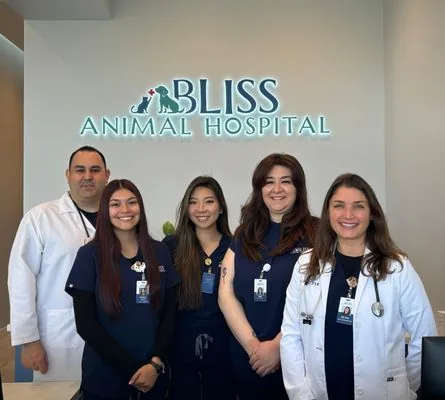
Our team, led by Dr. Nayara Pataro and Dr. Sam Amirshahi, is dedicated to providing compassionate, top-rated care right here in South Orange County. With a strong emphasis on relationships and personalized veterinary care, we’re here to support you and your pet’s health and happiness. If you’re looking for convenient, high-quality care nearby, check out our veterinarian services in Lake Forest, CA and surrounding areas like Veterinarian near Mission Viejo, CA, Irvine, CA Veterinarian (Great Park and Portola Springs) and vet near Rancho Santa Margarita, CA.



















Leave A Comment